

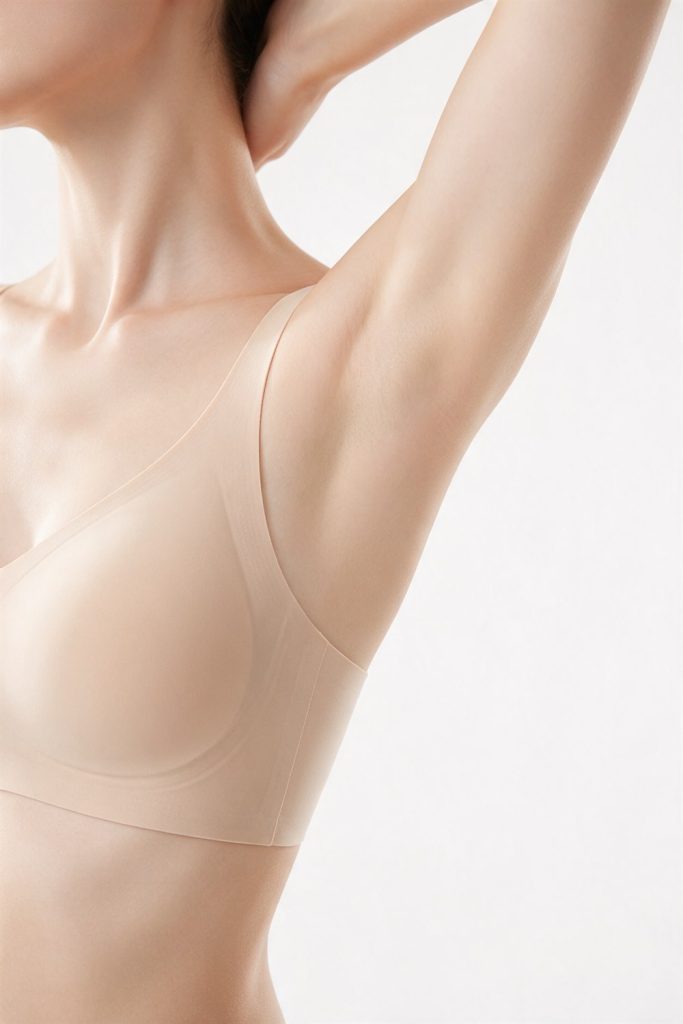
Mia Femtech Breast Augmentation
Mia Femtech is a minimally invasive, tissue-preserving breast augmentation method performed through a small incision in the armpit, without the need for general anesthesia. Developed by Establishment Labs, the manufacturer of Motiva implants, the system does not cut the breast gland, the chest muscle or the ligaments that support the breast; instead, the space for the implant is created by gently pushing the tissues aside with a special balloon. The aim is a natural-looking, proportionate fullness that suits your body measurements.
Treatment Summary
The following information is for general guidance purposes.
Exact durations and procedures are determined after individual evaluation.
Procedure Time
About 30 Minutes
Hospital Stay
Same-Day Discharge
Anesthesia
Local Anesthesia and Sedation
Return to Daily Life
2 - 3 Days
Mia is designed for women who want a small to moderate increase in fullness that preserves the natural shape of the breast, rather than a dramatic change in volume. In the published 3-year clinical study, the most commonly used implant sizes were 140 cc and 165 cc. The method is therefore not suitable for every patient; the decision is made together after an examination and, where needed, an ultrasound assessment.
The name Mia stands for Minimally Invasive Augmentation. In conventional breast augmentation, the implant pocket is created by separating the tissues with sharp instruments or electrocautery. In Mia, no tissue is cut: the tissues are first infiltrated and softened with a local anesthetic solution and then separated with dedicated instruments. The goal of this approach is to preserve, as far as possible, the breast gland, the nerves that carry nipple sensation and the supporting structures that hold the breast on the chest wall.
How Is Mia Femtech Performed?
The procedure begins with measurements and markings taken while you stand with your arms raised. A dedicated marking tool is used to define the incision site, the boundaries of the implant pocket and the point where the dissection will end. The procedure then continues in the following steps:
- Anesthesia: Intravenous sedation keeps you relaxed, and a tumescent local anesthetic solution is infiltrated around the breast under ultrasound guidance.
- Incision: An incision of about 2-4 cm is made in the armpit crease. In the clinical study, the incision was shorter than 3 cm in 85.5% of cases.
- Creating the channel: A blunt-tipped instrument called a channel separator creates a tunnel that runs over the chest muscle and beneath the breast tissue.
- Creating the pocket: An inflatable balloon is introduced through the tunnel and pushes the tissues outward without cutting them, opening a space that fits the implant. The pressure of the balloon also helps to control bleeding.
- Placing the implant: The implant is inserted into the pocket with a dedicated injector, without being touched by hand, and its position is checked with ultrasound.
- Closure: The incision is closed with absorbable sutures beneath the skin, and tissue glue is applied to the skin surface.
In the clinical study, the total time including infiltration of the local anesthetic, waiting for it to take effect and the surgery itself averaged 27 minutes, while the surgical step of creating the pocket and placing the implant took an average of 11 minutes.
The Implant Used in Mia
The Mia system uses Motiva SmoothSilk Ergonomix2 Diamond implants. Both sides of these implants are convex, and their flexibility allows them to be inserted with an injector through a small incision. The implant is placed in front of the chest muscle (prepectoral), within the layered fat and connective tissue behind the breast gland; the muscle is neither cut nor lifted.
According to the study authors, this geometry provides more projection than a round implant of the same volume and recruits the breast’s own tissue forward, helping to achieve the desired appearance with a smaller implant. In the clinical study, MRI scans performed on 33 randomly selected patients at an average of 19 months confirmed that all implants were intact and positioned in the intended plane.
Who Is a Suitable Candidate for Mia Femtech?
Mia is a suitable option for women who want a small to moderate augmentation and do not have significant breast sagging. The clinical study included women over 18 years of age who met the following criteria:
- A body mass index between 18.5 and 24.9
- A breast base width of less than 14 cm and a distance between the breasts of less than 3 cm
- No previous breast or axillary surgery
Women with significantly sagging (ptotic) or tuberous breasts, marked chest wall asymmetry or axillary deformities were not included in the study. For patients who already have breast implants or who want a larger increase in volume, options such as Preservé or conventional breast augmentation may be more suitable. When sagging is the main concern, a breast lift is considered.
Recovery After Mia
All patients in the clinical study were discharged on the same day as the procedure. The following recommendations generally apply afterwards:
- Wearing a surgical bra for one month
- Wearing a supportive band that holds the implant in position for the first 2-15 days
- Avoiding strenuous activities for the first two weeks
In the study, 76% of patients returned to daily activities such as showering and dressing within an average of 2.8 days, and 61% returned to exercise within an average of 20 days. A feeling of tightness and sensitivity in the breasts during the first few days is expected. Follow-up visits are scheduled on the first day, in the first week, at 3-6 weeks, at 3 and 6 months and regularly in the following years.
Clinical Study Results
The safety and effectiveness of Mia Femtech were examined in a prospective study in which 100 patients were followed for 3 years, and the results were published in the Aesthetic Surgery Journal. 93% of patients attended the third-year follow-up.
- At 3 years, the overall complication rate was 3.2% and the reoperation rate was 1%.
- No capsular contracture (Baker III-IV), implant rupture, infection, seroma, hematoma, rippling or breast implant-associated lymphoma (BIA-ALCL) was reported.
- No patient reported loss of sensation in the nipple or breast skin.
- In one patient, the implant migrated upward into the axillary channel; this was corrected by recreating the pocket with the balloon, without exchanging the implant. Palpability of the implant was reported in one patient at 2 years.
- 75.3% of patients had a bra size increase of 1-3 cups. The proportion of patients satisfied with their breasts rose from 41% before the procedure to 78% at 3 years.
Although these results are encouraging, they have limitations: the study was conducted at a single center with a relatively small number of patients, it was funded by Establishment Labs, and some of the authors have financial ties to the company. Some patients showed no change in cup size, which the authors attributed to weight gain and an increase in chest circumference during follow-up. Larger, multicenter and longer-term studies will define the place of the method more clearly.
Frequently Asked Questions
Will there be a scar on my breast?
Because the incision is made in the armpit crease, there is no scar on the breast itself. In the clinical study, both surgeons and patients rated the armpit scars as very close to normal skin.
Can I breastfeed after Mia?
In Mia, the breast gland and milk ducts are not cut, and the implant is placed behind the breast gland. The method is therefore not expected to prevent breastfeeding. Even so, it is important to discuss your pregnancy and breastfeeding plans during the consultation.
Can the implant be removed later?
Yes. The implant can be removed if necessary, and in most cases this can be done through the same armpit access.
Is general anesthesia required?
In most patients it is not. In the clinical study, 90 of the 100 patients were treated under local anesthesia and sedation; only the first 10 patients were operated on under general anesthesia during the initial evaluation phase of the method.
I would like a bigger change. Is Mia right for me?
Mia is designed for small to moderate augmentation. If you want a more noticeable increase in volume, Preservé, which is also a tissue-preserving technique, or conventional breast augmentation may be more suitable for you.
Personalized Assessment for Mia Femtech
Mia is a surgical procedure and, like any surgery, carries risks such as infection, implant displacement, asymmetry, palpability of the implant and pain. In addition, because the method uses dedicated single-use instruments, the cost is not limited to the price of the implants.
At the first consultation, I listen to your expectations and take measurements such as breast width and the distance between the breasts; where needed, the thickness of the breast tissue is assessed with ultrasound. We then decide together whether Mia is the right option for you, comparing it with other methods if necessary.
Scientific References
- Chacon-Quiros M, Sforza M, Solis-Chaves P, et al. The 3-Year Results of a 100-Patient Prospective Study of Safety and Effectiveness of Mia Femtech. Aesthetic Surgery Journal. 2026;46(3):250-259. doi:10.1093/asj/sjaf196
- Chacon-Quiros M, et al. Retrospective Validation of a Tissue-Preserving Breast Augmentation Approach: From Native Tissue Geometry to Surgical Practice. Aesthetic Surgery Journal. 2026;46(Suppl 2):S127-S137. doi:10.1093/asj/sjag110
- Lhuaire M, et al. Anatomical Basis of a Posterior Intralamellar Plane in Breast Tissue-Preservation Surgery. Aesthetic Surgery Journal. 2026;46(Suppl 2):S109-S116. doi:10.1093/asj/sjag059
