To receive detailed information about our procedures and to schedule an appointment, please fill out the form below.

The recovery process after rhinoplasty is not limited only to the success of the surgery. The post-operative care process can also directly affect the quality of the final result. One of the most frequently asked questions during this period is nasal massage. Massage applications, which are recommended especially for reducing swelling, shaping the tissues, and supporting healing, may be an important part of the process for some patients.
However, nasal massage is not applied in a standard way for every patient. The surgical technique, nasal structure, skin thickness, the surgical method used, and the doctor’s evaluation are all determining factors. For this reason, it is necessary to act consciously regarding massage after rhinoplasty and to apply it only in line with specialist recommendations.
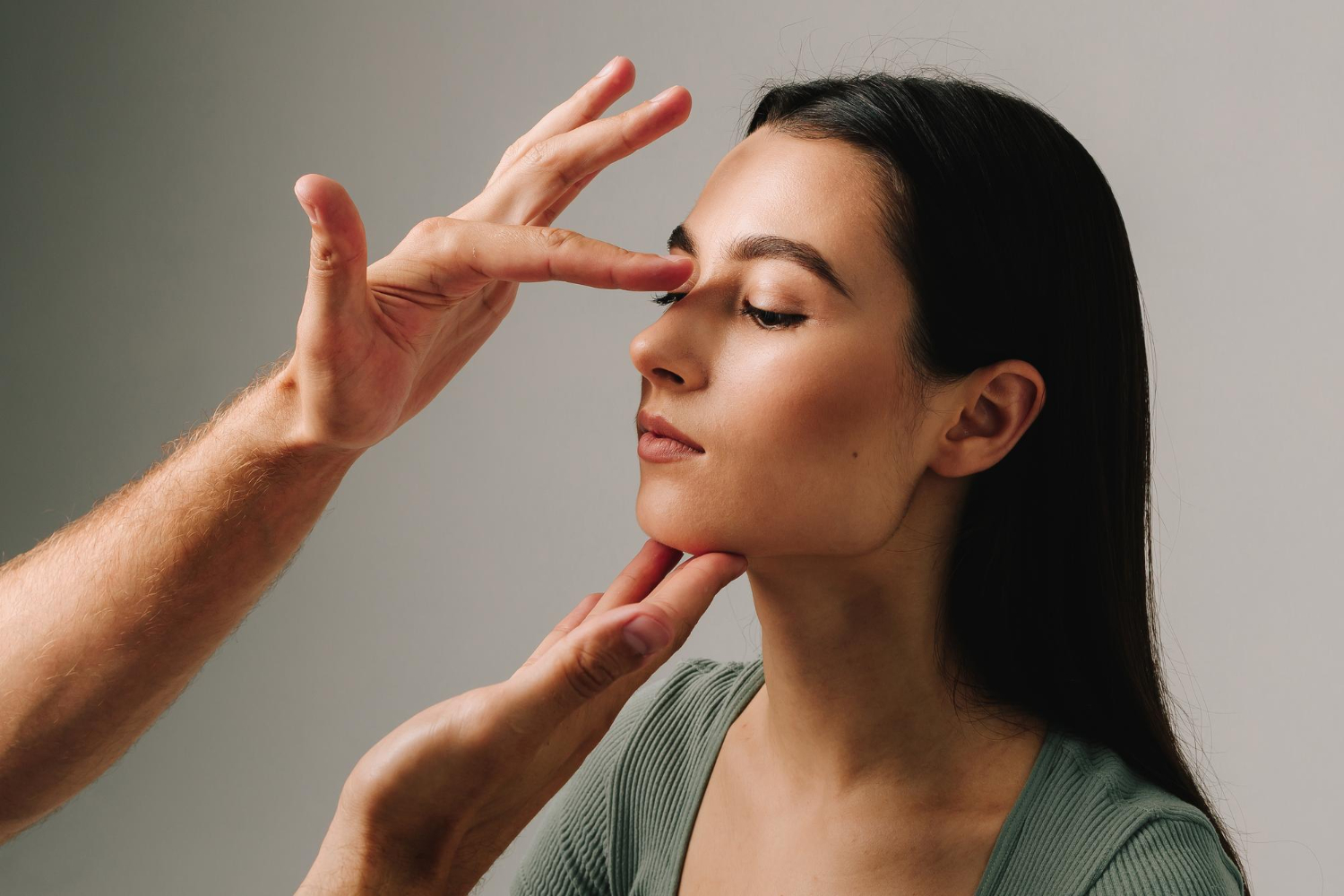
The main purpose of nasal massage after rhinoplasty is to help control the swelling that occurs following surgery. During the operation, a certain level of trauma is created in the nasal tissues, and as a result, swelling develops during the healing period. Massage techniques may help distribute this swelling more evenly in some patients.
Especially in rhinoplasty procedures involving bone and cartilage reshaping, it may take time for the tissues to adapt to their new form. When applied under medical supervision, proper massage techniques may help the skin and soft tissues settle more harmoniously onto the nasal framework. In some cases, stiffness may develop on the nasal bridge or tip.
Regular and controlled massage may support circulation, which can gradually help reduce this feeling of stiffness over time. However, the main purpose of massage is not to physically reshape the nose, but to support the healing process. Therefore, it must only be performed under a doctor’s recommendation and with the correct technique.
Nasal massage should not be considered a treatment that directly accelerates healing on its own. However, when applied to the right patient and with the correct technique, it may contribute to a more controlled recovery process. Especially during periods of significant post-operative swelling, appropriate massage may help fluid accumulation in the tissues distribute more evenly.
Nasal tissues continue to heal and reshape for months after surgery. Controlled interventions during this period may provide a more comfortable recovery for some patients. However, incorrect timing, excessive pressure, or improper techniques may negatively affect sensitive tissues. Therefore, each patient’s recovery plan must be individualized.
Nasal massage is not a mandatory procedure for every rhinoplasty patient. In some cases, doctors recommend regular massage, while in others it may not be necessary. This depends entirely on the surgical technique, the extent of the procedure, and the patient’s healing characteristics.
In patients with thin skin, swelling may resolve more quickly, whereas in patients with thicker skin, swelling may take longer to subside. For this reason, massage may be more important in certain cases. However, this does not mean that every patient with thick skin must undergo massage.
The extent of structural changes in the nose also matters. After more complex procedures such as revision rhinoplasty, doctors may recommend massage as a supportive method. In other cases, taping, edema control, or different care approaches may be sufficient. Unnecessary or incorrect applications may cause more harm than benefit.
When performed with the correct technique and appropriate pressure, nasal massage generally does not harm the internal structure of the nose. Post-operative massage recommendations are mainly focused on the skin, soft tissue, and edema control. Therefore, controlled application is considered safe for most patients.
However, after rhinoplasty, bone and cartilage structures remain sensitive for a certain period. Especially in the early stages of healing, uncontrolled pressure may cause sensitivity in internal structures. Excessively forceful and uncontrolled movements may negatively affect the healing process and increase swelling.
For this reason, massage must always be performed exactly as instructed by the surgeon. Random techniques learned online or methods suggested for other patients may not be suitable for everyone. Massage should always be personalized.
Incorrectly performed nasal massage may negatively affect the healing process in some cases. Excessive pressure, irregular movements, or techniques not recommended by the surgeon can cause unwanted outcomes in sensitive tissues.
After rhinoplasty, nasal tissues continue to reshape for a period of time. During this phase, every intervention must be performed carefully. Social media demonstrations showing strong pressure techniques can be misleading. The safest approach is to follow only the surgeon’s instructions.
Social media recommendations regarding nasal massage are not always reliable. Most short-form videos are shared without individualized medical evaluation. However, post-rhinoplasty care is a medical process that must be tailored to each patient.
A method that appears beneficial for one patient may be harmful to another because nasal structure, skin thickness, surgical technique, and healing capacity vary individually. Therefore, following a surgeon’s guidance is far safer than relying on online content.
In thick-skinned noses, post-operative swelling generally lasts longer due to the denser nature of the skin and soft tissues. For this reason, some surgeons place greater importance on massage in these patients.
Massage may help tissues shape more gradually and evenly in such cases. It can also assist in reducing stiffness and swelling, particularly at the nasal tip. However, since final results take longer to appear in thick-skinned patients, patience is essential during recovery.
Not every thick-skinned patient follows the same protocol. Some may benefit more from taping, others from medication or alternative care methods. Massage is only one part of the overall recovery plan and must be individualized.
Not performing nasal massage after rhinoplasty does not necessarily lead to negative outcomes. Many patients recover successfully without any massage, as healing is primarily driven by the body’s natural repair mechanisms.
However, in cases where massage is specifically recommended by the surgeon, not performing it may prolong swelling or make stiffness more persistent in certain areas. Especially in thick-skinned patients or revision surgeries, massage can become a more supportive element of recovery.
The most important point is that the decision to use massage should never be made by the patient alone, but by the surgeon. A careful and controlled recovery process is essential for long-term rhinoplasty outcomes.
Specialist in Aesthetic, Plastic and Reconstructive Surgery
To receive detailed information about our procedures and to schedule an appointment, please fill out the form below.
You can send us an email or reach us by phone for more information.
Assoc. Prof. Dr. Beşir Öztürk, Specialist in Aesthetic, Plastic, and Reconstructive Surgery, combines the latest surgical techniques with years of experience to achieve natural, balanced, and aesthetic results.
Each procedure is carefully planned to reflect the best version of you and help you rediscover yourself.
