To receive detailed information about our procedures and to schedule an appointment, please fill out the form below.

The rectus muscles, which form the anterior abdominal wall, are one of the most important structures that provide central stability of the body. These muscles normally lie parallel to each other in the midline and are connected by a strong fascial structure. However, in situations such as pregnancy, rapid weight changes, sports that create intense pressure, or connective tissue weakness, this ligament structure may loosen and the muscles may separate from each other. This condition is called diastasis recti, that is, abdominal muscle separation.
From an aesthetic point of view, muscle separation not only creates a feeling of bloating in the abdominal area; It can make the waist line look wider, distort the abdominal contour and reflect the person's form differently. It is equally important from a functional perspective – it affects body posture, can increase lower back pain and weaken core strength.
Therefore, diastasis recti is the subject of not only plastic surgery but also functional repair. Modern surgical approaches provide an aesthetic and functional result by restoring the abdominal muscles to their previous position and reshaping the abdominal area in the same session. Especially in patients who experience changes in the abdominal area after birth, surgery improves not only the appearance but also the quality of life.
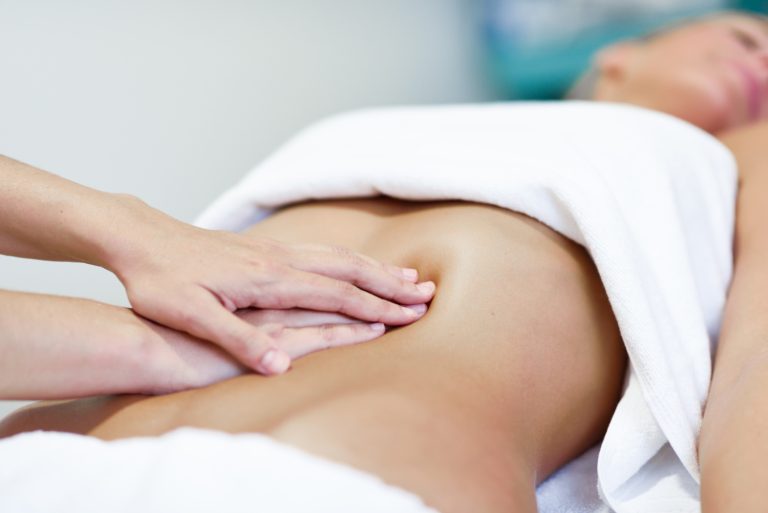
This situation is often confused with weight; No matter how much exercise a person does, the belly area does not become flat. The most common symptoms:
Curvature / pushing outward in the belly area
It is most common after pregnancy; The risk increases especially in multiple pregnancies and large babies.
Diagnosis can be made with a simple clinical examination; If necessary, evaluation is made with ultrasound or MRI.
Diastasis recti repair is the process of bringing the separated rectus muscles back together on the midline. It is usually performed in combination with tummy tuck surgery (abdominoplasty), because muscle separation is often accompanied by skin loosening and excess skin in the abdomen.
Surgical stages
In some advanced cases, especially if the connective tissue is weak, special mesh support can be used. The goal is a stable and permanent repair – it should not be reopened by force.
This process not only improves appearance; It strengthens the abdominal wall, improves posture and restores core stability.
Liposuction alone is not sufficient in these patients, because the problem is muscle separation, not fat.
It is normal to feel tension in the abdominal area in the first days after surgery. Patients use a support corset and return to daily activities within a few days. Average:
2–3 weeks of light activity
The result: flatter abdomen, slimmer waistline, strong core and healthy posture.
The natural and healthy contour returns, and the patient is noticeably relieved in terms of both appearance and living comfort.
Diastasis recti is not just an aesthetic issue; It is a functional abdominal wall weakness. Beyond correcting the appearance of the abdomen, surgical repair restores muscle strength and body balance. Anatomical repair performed with modern techniques offers permanent results and makes the abdominal area look young, flat and strong.
Specialist in Aesthetic, Plastic, and Reconstructive Surgery
To receive detailed information about our procedures and to schedule an appointment, please fill out the form below.
You can send us an email or reach us by phone for more information.
Assoc. Prof. Dr. Beşir Öztürk, Specialist in Aesthetic, Plastic, and Reconstructive Surgery, combines the latest surgical techniques with years of experience to achieve natural, balanced, and aesthetic results.
Each procedure is carefully planned to reflect the best version of you and help you rediscover yourself.
